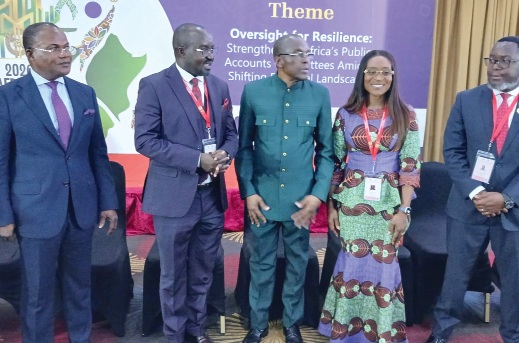
The Speaker of Ghana's Parliament, Alban Sumana Kingsford Bagbin, has urged African governments to move auditor-generals and national audit institutions under parliamentary oversight instead of the executive, arguing that the current arrangement compromises their independence. He made the case on Wednesday in Accra at the annual conference and general meeting of the African Organisation of Public Accounts Committee (AFROPAC), according to Graphic Online.
Bagbin said audit bodies that sit within the executive branch are asked to examine the same government that appointed them, which creates a conflict of interest. Because such officers owe their positions to the executive, he argued, their loyalty follows the same path, undermining the scrutiny they are meant to provide over public funds.
The four-day gathering is being held under the theme "Oversight for resilience: Strengthening Africa's public accounts committees amid a shifting financial landscape." It brings together Speakers of Parliament, parliamentary leaders, heads of Supreme Audit Institutions, finance officials and delegates from across the continent. Its stated aim is to build the capacity of Public Accounts Committees (PACs) to carry out effective parliamentary oversight, promote fiscal accountability and safeguard public resources as financial and economic conditions change.
Why it matters
The proposal touches the core of how African states hold themselves to account. Audit institutions are the bodies that trace how tax revenue and borrowed money are spent, and their findings feed the work of PACs, the parliamentary committees that examine public spending. If those institutions answer to the executive, Bagbin argues, the watchdog and the watched become the same household.
The conference comes as several speakers pointed to rising public debt and pressure on government revenues across the continent. In that environment, the margin for waste and leakage narrows, and the case for independent scrutiny grows. Graphic Online reports that the meeting is intended to strengthen PACs so they can protect public resources amid shifting financial conditions.
A call for courage and resources
Bagbin, who also chairs the African Parliamentary Network Against Corruption (APNAC), said Parliament has a duty to make public officials account for the resources placed in their trust. He urged PAC members to carry out their oversight without fear or political bias, and to summon the courage to challenge officials over financial irregularities and mismanagement.
He also asked for adequate financial and institutional backing for the committees, saying their work is too important to be held back by small budgets.
Beyond funding, the Speaker raised a visibility problem. In many countries, Ghana included, PAC reports are not debated thoroughly on the floor of Parliament, which limits public awareness of what the committees find and recommend. He called on parliaments to work more closely with the media so that hearing outcomes lead to concrete action rather than sitting on paper.
Bagbin further encouraged African legislatures to pass laws regulating professional practice, so that people entrusted with financial responsibility hold the required qualifications and ethical standing.
Tracking loans, taxes and follow-through
AFROPAC Vice-Chairperson Abena Osei-Asare, who is also the New Patriotic Party MP for Atiwa East, asked PACs across Africa to keep close watch on government borrowing, revenue collection and whether audit recommendations are actually implemented. She said the changing financial landscape, mounting public debt and strain on government income demand stronger parliamentary scrutiny. "Our parliaments must follow every loan contracted and every tax collected," she said, as reported by Graphic Online.
Osei-Asare argued that the success of a PAC should not be judged by how many public hearings it holds or how many irregularities it uncovers, but by the corrective steps taken to stop the same problems from returning.
Minority Leader Alexander Afenyo-Markin made a similar point, saying effectiveness should be measured by remedies applied, money recovered and penalties imposed, not by the number of officials summoned to appear. DailyGuide Network reported his call for misappropriated public funds to be recovered.
Finance Minister Dr Cassiel Ato Forson, in an address read on his behalf, pressed African governments to sanction officials found responsible for financial irregularities. He warned that repeated audit findings without consequences erode public accountability, describing a cycle in which reports are presented, hearings held and recommendations issued while nothing changes. "Accountability without consequences is just documentation," he said. He also argued that citizens cannot be asked to pay more tax while waste, leakages and financial indiscipline drain the public purse.
CitiNewsroom.com reported that Bagbin separately urged the PAC to detain officials who fail to account for public funds, while Ghana Business News reported that the Minority Leader called for stronger enforcement of audit findings across the continent.
What to watch
The conference runs for four days, and its closing outcomes will indicate whether the push to relocate audit institutions under parliaments gains formal backing from the delegations attending.